


Interview with Deutschlandfunk: When does someone become an enemy of the constitution?
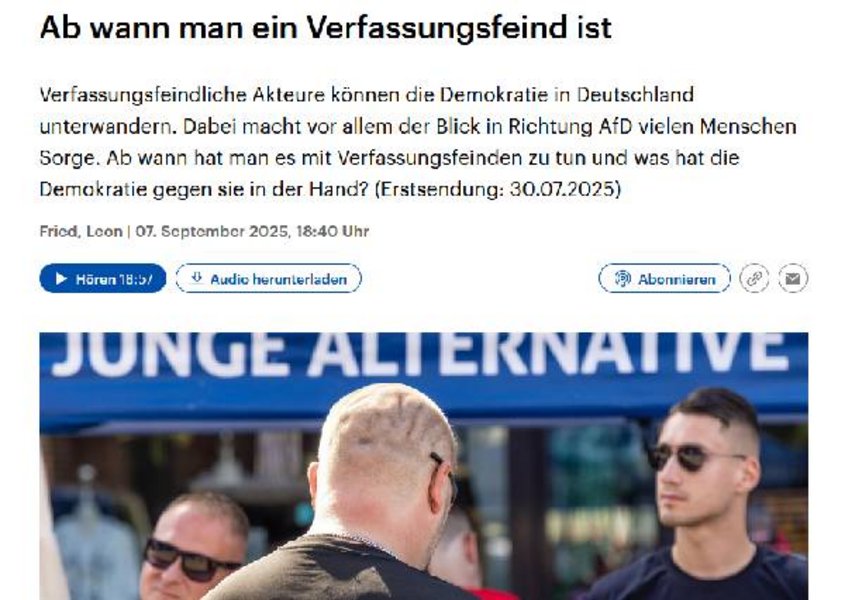
On September 7, Prof. Dr. Antje von Ungern-Sternberg gave an interview to Deutschlandfunk radio for the “Hintergrund” program on the topic of anti-constitutionalism. The interview covers not only the AfD, but also the Radikalenerlass (Radicals Decree) and the Weimar Republic. The episode can be listened to here.
Artificial Intelligence and Fundamental Rights: The AI Act of the European Union and its implications for global technology regulation
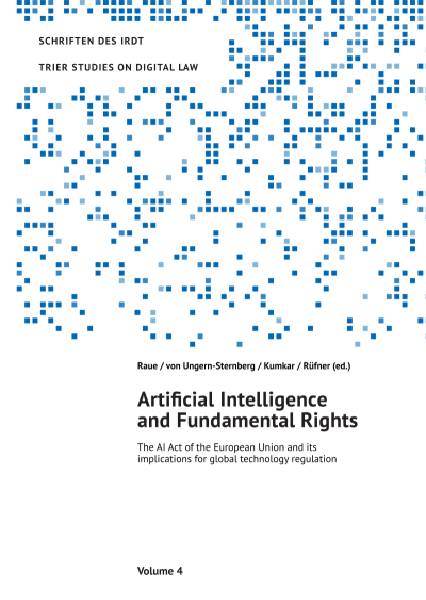
As AI technologies rapidly reshape societies, they pose both tremendous opportunities and serious risks—especially to fundamental rights. In response, the European Union has enacted the groundbreaking AI Act: a legal framework designed to foster innovation while safeguarding democratic values, human autonomy, and the rule of law. But has this delicate balance been struck successfully?
This volume, emerging from the 2024 annual conference of the Digital Law Institute Trier (IRDT), critically examines the EU’s rights-driven approach to AI regulation. From the perspectives of leading scholars and practitioners—including those directly involved in drafting and implementing the Act—it offers deep insights into the legal, ethical, and technical foundations of the AI Act and its global significance. With contributions on prohibited AI practices, the risk-based regulatory model, and key obligations like data governance and human oversight, the book explores how AI can be regulated to protect fundamental rights without stifling innovation. The book concludes with a comparative view on AI regulation from the United States and Asia.
The book can be read here.
New episode of the podcast “Im Treff” now available

The thirteenth episode of the podcast series “Im Treff – Trierer rechtspolitische Gespräche” (In the Meeting – Trier Legal Policy Discussions), produced by the Institute for Legal Policy at the University of Trier (IRP), has been released:
“How can a non-binding opinion sharpen international climate law?”
What are the climate protection obligations of states under international law? And what happens if they fail to fulfill them? These questions have been highly controversial for decades. At the request of the UN General Assembly, the International Court of Justice has now published a landmark advisory opinion intended to answer these questions. Among other things, it comments on the 2-degree target of the Paris Climate Agreement, a possible human right to a clean environment, and the question of whether states can claim compensation for natural disasters caused by climate change.
As many answers as the Court's advisory opinion provides, it immediately raises just as many new questions. What significance does this advisory opinion have for international environmental law? Can we now expect a wave of lawsuits from the Global South, and what means does international law offer to actually hold states accountable for violations of the law? And could the opinion ultimately even influence German law? Our colleague Noah Drautzburg discussed these questions with Prof. Dr. Alexander Proelß (Hamburg).
All episodes are available on Spotify, Amazon Music, and Apple Podcasts!
Post on the Verfassungsblog: No money for enemies of the constitution in parliament?
On June 14, 2025, an article by Prof. Dr. von Ungern-Sternberg appeared on the Verfassungsblog entitled “No money for enemies of the constitution in parliament? On the admissibility of funding restrictions for parliamentary staff.”
Post on the Verfassungsblog
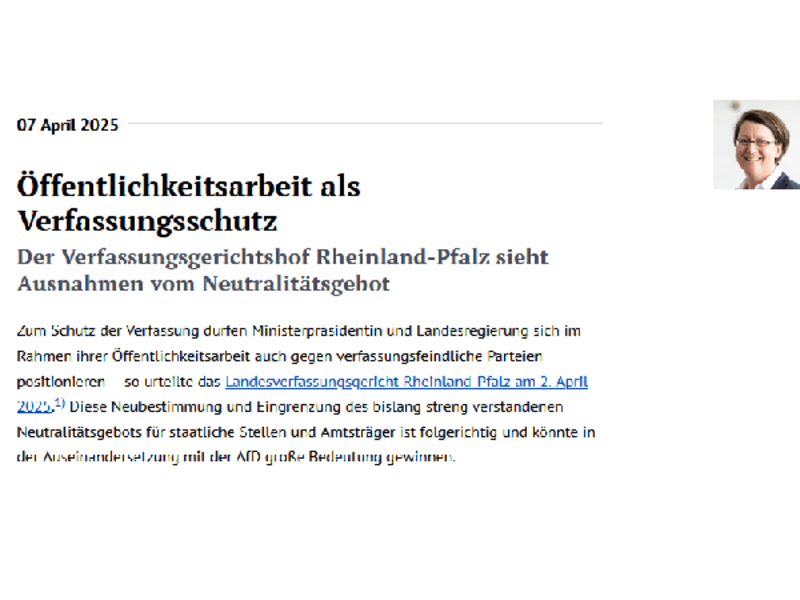
On April 7, 2025, an article by Prof. Dr. von Ungern-Sternberg appeared on the Verfassungsblog (Constitutional Law Blog) entitled “Public relations as constitutional protection – The Constitutional Court of Rhineland-Palatinate sees exceptions to the requirement of neutrality.”
Public administration: enemies of the constitution in government
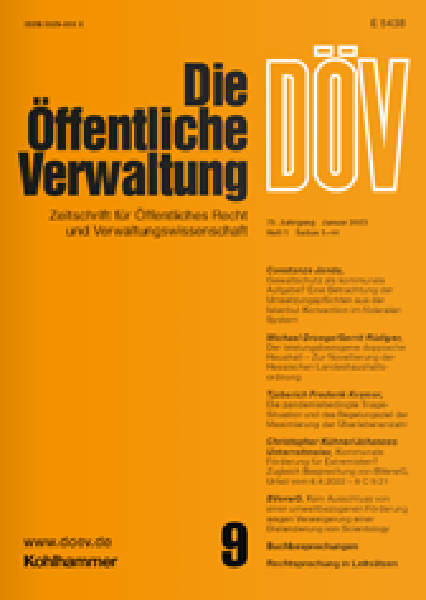
An article by research assistants Ann-Sophie Weber and Bernhard Weiler entitled “Enemies of the constitution in government – what happens now?” has been published in the journal Die Öffentliche Verwaltung (DÖV) (DÖV 2025, 372).
The expert opinion of 17 constitutional law professors on the prospects of success of a party ban against the Alternative for Germany party caused a stir in November 2024. Following on from this, this article discusses the legal consequences of a party ban in more detail. In addition to the well-known and much-discussed legal consequence of the loss of legislative mandates, the question arises as to whether such a loss of mandate would also affect executive offices.
Political targeting in the EU
Prof. Dr. Antje von Ungern-Sternberg and research assistant Pia Diemath have published an article in the Juristenzeitung (JZ 2025, 373) entitled “Political Targeting in the EU.”
The article takes a critical look at the new EU regulation on transparency and targeting in political advertising. It questions the regulatory objective and its implementation and, taking into account the GDPR and DSA, examines where the legislator has overshot the mark in its efforts to restrict manipulative or discourse-hostile forms of election campaigning.
Chair substitution: Dr. Vanessa Hellmann

Prof. Dr. von Ungern-Sternberg will be represented in teaching by Dr. Vanessa Hellmann in the coming summer semester 2025. Dr. Hellmann conducts research in particular in the field of German and European constitutional law, especially on questions of fundamental rights dogmatics and constitutional issues of electoral law. The upcoming courses can be found on our website here.
Photo: University of Bielefeld
Article on the Verfassungsblog
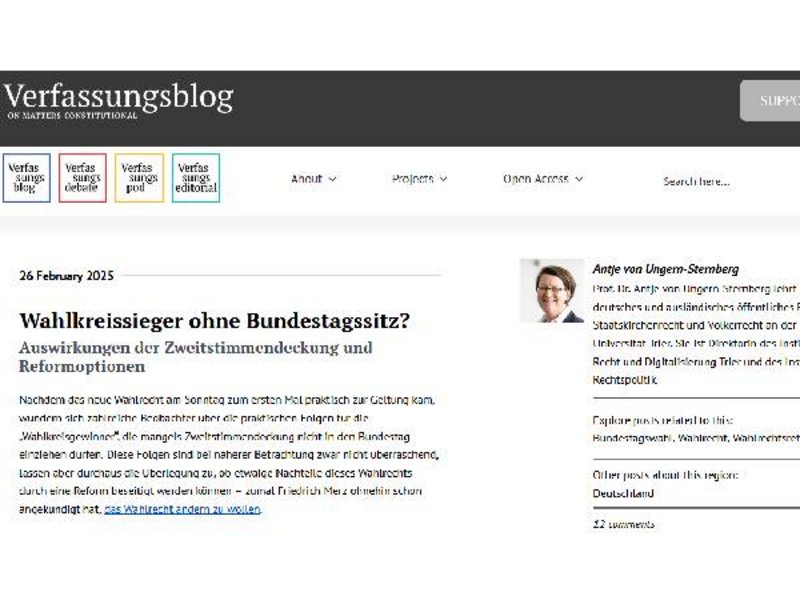
On February 26, 2025, an article by Prof. Dr. von Ungern-Sternberg was published on the Verfassungsblog with the title “Wahlkreissieger ohne Bundestagssitz? - Effects and reform options”.
Interview with Netzpolitik.org
![[Translate to Englisch:] Das Hauptbild zeigt den Reichstag in Berlin, darüber sind bunte Sprechblasen (rot, schwarz, grün, pink, braun) als digitale Collage eingefügt.](/fileadmin/_processed_/d/f/csm_Netzpolitik2025_1425252a12.jpg)
On February 13, 2025, Netzpolitik.org published an interview with Prof. Dr. von Ungern-Sternberg entitled “Illegal election advertising with taxpayers' money”. The article examines the funding and legality of MPs' social media posts.
Yearbook of the 67th Bitburger Gespräche
![[Translate to Englisch:] Cover des Tagungsbandes](/fileadmin/_processed_/d/9/csm_csm_Bitburger_Gespra__che_RLP_0fcb89235c_aae2fd63df.jpg)
The yearbook of the 67th Bitburger Gespräche on the topic of “Reform of public broadcasting - status and perspectives” has been published by Beck Verlag. It contains all the speeches given at the conference. The contributions deal with the situation of public broadcasting, present explanations for this situation and shed light on the possibilities and limits of a reform of the ÖRR.
ISBN 978 3 406 83066 2
The yearbook can be purchased here. The articles can also be found here on the homepage of the Institut for Legal Policy (IRP).
External legal control of intelligence services - Publication of volume 7 of the series “digital | recht Staat und digitale Gesellschaft”
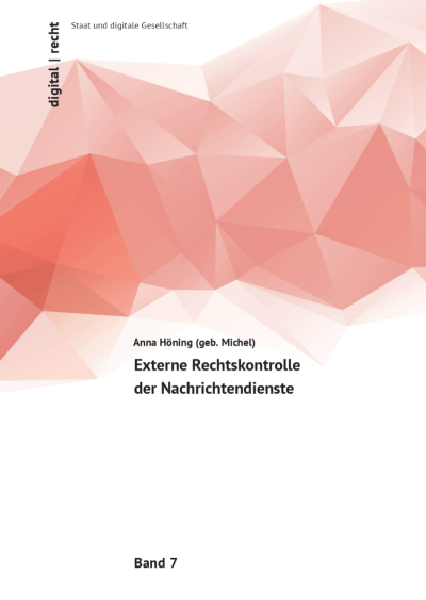
A new volume has been published in the open access series “digital | recht Staat und digitale Gesellschaft”, which is supported by the Institute for Digital Law Trier (IRDT):
Volume 7, published by Dr. Anna Höning (born Michel) on October 28, 2024: External legal control of the intelligence services
New episode of the podcast “Im Treff” now available
![[Translate to Englisch:] Logo des IRP Podcasts. Blauer Klreis mit weißen Kopfhörern und dem weißen Schriftzug IRP.](/fileadmin/_processed_/c/6/csm_IRP_Podcast_9d496ca9a9.jpg)
The eleventh episode of the podcast series “Im Treff - Trierer rechtspolitische Gespräche” produced by the Institute for Legal Policy at the University of Trier (IRP) has been released:
“Do future generations already have rights today?”
Do we need to expand our understanding of civil liberties in order to make the Constitution fit for the future? The Federal Constitutional Court brought new attention to this question with its climate decision in 2021, but it could also arise in connection with national debt or social systems. Prof. Dr. Svenja Behrendt (Mannheim) agrees, but at the same time criticizes the Federal Constitutional Court's conceptual solution.
What are its problems? How else could such liberties of future generations be understood? And what impact could this have today? Noah Drautzburg (Research Associate at IRP Trier) was able to talk about this with Prof. Dr. Svenja Behrendt.
All episodes are available on Spotify, Amazon Music and Apple Podcasts!
The IRP will continue to publish further episodes on current legal policy topics in the future. Do you have any questions or suggestions regarding the podcast? Then please send an e-mail to irpsekuni-trierde.
Artificial Intelligence and Fundamental Rights
![[Translate to Englisch:] Cover IRDT Veranstaltung](/fileadmin/fb5/prof/OEF010/Aktuelles/IRDT_AI.jpg)
The Institute for Digital Law Trier (IRDT) is hosting its Annual International Conference on 26.09. and 27.09.2024 on the following topic: Artificial Intelligence and Fundamental Rights - Impact of the new European Union's AI Act
Artificial intelligence applications often intersect with fundamental rights, forming a landscape that requires legal understanding and technical expertise. The AI Act aims to protect fundamental rights while creating a legal framework that encourages innovation. Our academic conference will explore whether this delicate balancing act has been achieved.
You can register via the following link.
“(Joint) Liability in Data Protection Law: Prerequisites, Consequences, Perspectives” - Publication of Volume 6 of the publication series ”digital | recht Staat und digitale Gesellschaft”
![[Translate to Englisch:] Cover neuer Band 6](/fileadmin/fb5/prof/OEF010/Aktuelles/Marosi.jpg)
A new volume has been published in the open access publication series “digital | recht Staat und digitale Gesellschaft” supported by the Institute for Digital Law Trier (IRDT):
Volume 6 published by Johannes Marosi on August 19, 2024: (Joint) Responsibility in Data Protection Law: Prerequisites, Consequences, Perspectives
IRP podcast “Im Treff” on new platforms
![[Translate to Englisch:] Computerbildschrim mit den Logos der verschiedenen Plattformen, auf der der Podcast jetzt abrufbar ist](/fileadmin/fb5/prof/OEF010/Aktuelles/Podcast_Plattformen.jpg)
The podcast series “Im Treff” by the Institute for Legal Policy at Trier University (IRP) is now available on Spotify, Apple Podcast and Amazon Music.
The podcast features discussions with experts on current legal policy issues and developments in society, case law and legislation.
“Die official criminal order of information” - Publication of Volume 5 of the publication series “digital | recht Staat und digitale Gesellschaft”
![[Translate to Englisch:] Cover Bild des Bandes in rot weiß mit schwarzer Schrift](/fileadmin/fb5/prof/OEF010/Aktuelles/Band_5.jpg)
A new volume has been published in the open access publication series “digital | recht Staat und digitale Gesellschaft” supported by the Institute for Digital Law Trier (IRDT):
Volume 5 published by Sebastian Golla on August 12, 2024: Die kriminalbehördliche Informationsordnung
Discussion and networking evening: Through the glass ceiling - making hurdles visible
![[Translate to Englisch:] Logog Mentoring Universität Trier](/fileadmin/_processed_/3/3/csm_Logo_Mentoring_Universitaet_Trier_ba00b17dbe.jpg)
On 9 July 2024, Prof. Dr. Antje von Ungern-Sternberg took part in a discussion and networking evening organized by Dr. Daniela Kolbe-Hanna (project coordinator of the mentoring programme) and Dr. Claudia Seeling (Central Equal Opportunities Officer at Trier University) as part of the mentoring programme of the Equal Opportunities Office on the topic of “Breaking through the glass ceiling - making hurdles visible”.
As part of a panel discussion, Prof. Dr. Eva Martha Eckkrammer (President of Trier University), Dr. Ulrike Graßnick (Chancellor of Trier University), Prof. Dr. Sabine Arndt-Lappe (Vice Dean FB II/Anglistics at Trier University), Julia Lübcke (Estate Director Bischöfliche Weingüter Trier GbR), Dr. Silke Stapel-Weber (former Director General at the European Central Bank) and Prof. Dr. Antje von Ungern-Sternberg (Dean FB V/Legal Studies at the University of Trier) talked about hurdles and obstacles in their professional lives and encouraged women to continue on their path.
Further information can be found here.
Legal classification of election posters in the Trierischer Volksfreund
![[Translate to Englisch:] Trierischer Volksfreund](/fileadmin/_processed_/c/b/csm_Trierischer_Volksfreund_Schriftzug__Untertitel_45b1eea68b.jpg)
Against the backdrop of the European elections on June 9, 2024, our research associate Ralf Michael Gitzen legally classifies election posters with the slogan “Stop the genocide in Gaza!” in the Trierischer Volksfreund of June 3, 2024. The article containing this classification can also be accessed online here. We hope you enjoy reading it!
Launch of the Open Access publication series „Schriften des IRDT | Trier Studies on Digital Law"
![[Translate to Englisch:] Cover Volume 1 Schriften des IRDT](/fileadmin/_processed_/6/a/csm_Content_Regulation_In_The_European_Union_37225059a2.jpg)
The new open access series „Schriften des IRDT | Trier Studies on Digital Law", published by the new Förderverein Recht und Digitalisierung e.V. (VRD), has been launched.
Volume 1 contains contributions by Lea Katharina Kumkar, Martin Steinebach, Antje von Ungern-Sternberg, Mattias Wendel, Florence G'Sell and Ruth Janal on the topic of the recent IRDT-Herbsttagung:
Content Regulation in the European Union: The Digital Services Act.
Volume 1 is available here. The works in the series are also available as print-on-demand.
Trierer Gespräche (Trier Talks) in the summer semester 2023
![[Translate to Englisch:] TGRD SoSe 2023](/fileadmin/_processed_/1/5/csm_TGRD_SoSe_2023_225f0bacba.png)
Also in the summer semester 2023, the Institut für Recht und Digitalisierung Trier (IRDT) invites you to the Trierer Gesprächen zu Recht und Digitalisierung (Trier Talks on Law and Digitalization). These are under the heading: „Cyberwarfare".
On Tuesday, June 6, 2023, at 6:30 p.m., Prof. Dr. David Roth-Isigkeit (Deutsche Universität für Verwaltungswissenschaften Speyer) will speak first on the topic of „Cyberwar and International Law: The Stony Road to a Digital World Peace Order". This will be followed by a presentation by Dr. Elisabeth Hoffberger-Pippan (Leibniz-Institut Hessische Stiftung Friedens- und Konfliktforschung) on „Russia's Cyberwar in Ukraine."
On Tuesday, June 20, 2023, at 6:30 p.m., Prof. Dr. Tristan Barczak (Universität Passau) will speak on „Constitutional Issues of Hackbacks" and Dr. Carolyn Moser (Max-Planck-Institut für ausländisches öffentliches Recht und Völkerrecht Heidelberg) will follow with „A European Law Classification of Hackbacks."
The events will take place in hybrid form and are open to all interested parties. Participation in attendance (Building C, HS 5) does not require prior registration. However, participation is also possible via Zoom.
For more information, please visit https://irdt.uni-trier.de/events/tgrd-cyberwar-und-int-cybersicherheit/ and https://irdt.uni-trier.de/events/tgrd-hackbacks/. You can access the participation link shortly before the event at the aforementioned URLs.
IRDT Lecture with Prof. Dr. Ivana Jelić, Judge at the ECtHR
![[Translate to Englisch:] IRDT Lecture Jelic](/fileadmin/_processed_/7/8/csm_IRDT_lecture_Ivana_jelic_f35dea582d.png)
The Institut für Recht und Digitalisierung (IRDT) is pleased to announce that Prof. Dr. Ivana Jelić, Judge at the European Court of Human Rights, will give a lecture on „Freedom of Speech in the Digital Sphere" at an IRDT Lecture on Monday, May 22, 2023, at 3 pm.
The event will take place at Trier University (Room E 51) and is open to the public. It offers lawyers, academics, and students interested in human rights issues an excellent opportunity to engage in conversation with a leading expert in the field. Following the lecture, participants will have the opportunity to ask questions and engage in dialogue with Prof. Dr. Jelić.
Event language: English
New episode of the podcast „Im Treff" now available
![[Translate to Englisch:] IRP Podcast](/fileadmin/_processed_/e/6/csm_IRP_Podcast_HP_5fe1cd0feb.png)
In the podcast series „Im Treff - Trierer rechtspolitische Gespräche" produced by the Institute for Legal Policy at the University of Trier (IRP), the eighth episode has been released:
„Rechtsstaatlichkeit in der Europäischen Union“ („Rule of Law in the European Union.")
What is the state of the rule of law in the European Union? What instruments are available to the association of states to counteract questionable tendencies and how effective are they? Noah Drautzburg (Research Fellow at IRP Trier) will talk about this with Dr. Katarina Barley (SPD, MEP, Vice President of the European Parliament). They discuss, among other things, the perspectives of Art. 7 and infringement proceedings, the situation in Hungary and Poland, and the right way to deal with threats of withdrawal by Hungary.
All episodes available on Spotify, Amazon Music and Apple Podcasts!
Article in the JZ 9/23
![[Translate to Englisch:] Cover JZ 9/2023](/fileadmin/_processed_/5/1/csm_Cover_JZ_9_23_5ec27f492f.jpeg)
In the JuristenZeitung (JZ 2023, 403) report research associate Noah Drautzburg and research associate Thomas Kemper about the 66th Bitburger Gespräche, which took place in Trier on January 12 and 13, 2023. The event, organized by the Gesellschaft für Rechtspolitik (gfr) and the Institut für Rechtspolitik an der Universität Trier (IRP), was devoted to the topic of „Stratetic Litigation - the Enforcement of Collective Interests before German Courts."
The article in the JZ is now available here (Mohr Siebeck Verlag).
Lecture/reading course in constitutional law of religion in SoSe 2023.
![[Translate to Englisch:] Audimax Uni Trier](/fileadmin/_processed_/d/1/csm_Bild_Aktuelle_Lehre__fcfa2b948f.jpeg)
Numerous conflicts about religion are present in society and politics and are fought out legally, e.g. bans on burqas in public or exemptions from school lessons on religious grounds. These and other topics will be dealt with in this lecture. In particular, it will be shown how classical national law (especially freedom of religion according to Art. 4 GG) is increasingly influenced by the requirements of the ECHR and European law.
At the same time, the course is designed as a „reading course", because after a short input by the lecturer, the material is to be worked out together with the students by reading central court decisions. Thus, the methodology of how to read, understand, classify and criticize decisions of the BVerfG, the ECJ and the ECtHR will be taught.
The course is aimed at all interested students from the first semester onwards. It is also a component of Focus 1 (Fundamentals of European Legal Development). The final exam can be used to obtain a required certificate for the „Studium fundamentale" certificate.
Further information can also be found here.
IRDT Activity Report 2022/23
![[Translate to Englisch:] IRDT Tätigkeitsbericht 2022/23](/fileadmin/_processed_/1/e/csm_IRDT_Ta__tigkeitsbericht_1_4d8e7b6987.png)
In the fourth year of its existence, the Institut für Recht und Digitalisierung (IRDT), of which the chair Antje von Ungern-Sternberg is a director, can be proud of having established itself as a research institute in the German-speaking world. In the past year, the IRDT was able to consolidate this position and to turn to internationalization in a special way, i.e. to set international projects on track and to deepen existing international contacts.
Click here for a detailed version of the report.
Legal policy colloquium on electoral law reform
![[Translate to Englisch:] Rechtspolitische Kolloquium IRP](/fileadmin/_processed_/f/3/csm_Kolloquium_IRP_3_5_2023_58c1b5a31b.png)
On May 3, 2023, the Institut für Rechtspolitik an der Universität Trier (IRP) invites you to an online lecture by constitutional law expert Prof. Dr. Christoph Möllers (Humboldt-Universität zu Berlin) on the traffic light electoral reform and a subsequent classification by sociologist and chair of the German Society for Electoral Research Prof. Dr. Sigrid Roßteutscher (Goethe-Universität Frankfurt a.M.). In addition, Mr. Michael Frieser (Member of the Bundestag and legal advisor to the CDU/CSU Bundestag faction) will contribute a co-lecture. After the presentations, there will be an opportunity for discussion. The online event will start at 18:30 via Zoom.
Cordial invitation to this! Registrations to irpsek@uni-trier.de.
„Der Schulfriede als Schranke der Religionsfreiheit“ – Dissertation published
![[Translate to Englisch:] Cover Dissertation Moir](/fileadmin/_processed_/d/2/csm_Moir_Dissertation_d91f1f3ad3.jpeg)
The dissertation„Der Schulfriede als Schranke der Religionsfreiheit" („School Peace as a Barrier to Religious Freedom"), supervised by Prof. Dr. Antje von Ungern-Sternberg and written by former chair member Dr. Joshua Moir, has been published by Mohr Siebeck Verlag. The work is available under ISBN 978-3-16-161776-8.
Prof. Dr. Dr. Helmut Goerlich has reviewed the publication in the German Administrative Gazette (DVBl. 2023, 590). The article is available here (Carl Heymanns Verlag/Wolters Kluwer).
Prof. Dr. Antje von Ungern-Sternberg Dean of Faculty V - Law at the University of Trier
![[Translate to Englisch:] Siegel FB V](/fileadmin/_processed_/9/5/csm_csm_Siegel_FB_2f11587e6e_27218e9a5f.png)
On April 1, 2023, Prof. Dr. Antje von Ungern-Sternberg took over the office of Dean of Faculty V - Law at Trier University from her predecessor Prof. Dr. Benjamin Raue. The Vice Dean is Prof. Dr. Mohamad El-Ghazi.
Article in the BRJ 1/2023
![[Translate to Englisch:] Bonner Rechtsjournal](/fileadmin/_processed_/9/9/csm_Logo_Bonner_Rechtsjournal_65a1ca09ba.png)
Research assistant Manuel Beh (Institut für Deutsches und Europäisches Wasserwirtschaftsrecht und Lehrstuhl für Öffentliches Recht Prof. Dr. Michael Reinhardt, LL.M. (Cantab.), Universität Trier) has published an article in the Bonner Rechtsjournal (BRJ 2023, 52) entitled „Human Right to Covid-19 Vaccines? - A Question of International Law Solidarity." This is based on his seminar paper written in SoSe 2022 in the focus „European and International Law" on the topic „Solidarity in International and European Law" with Prof. Dr. Antje von Ungern-Sternberg. You can access the journal here (Bonner Rechtsjournal).
Participation in excursion to the European Court of Human Rights
![[Translate to Englisch:] EGMR Exkursion 29. März 2023](/fileadmin/_processed_/4/b/csm_EGMR_Exkursion_Maerz_2023_25b7d28939.jpg)
On March 29, 2023, members of Prof. Dr. von Ungern-Sternberg's team participated in a field trip to the European Court of Human Rights in Strasbourg organized by the Chair of Prof Dr. Birgit Peters. They visited the hearings (Grand Chamber) in the cases Verein KlimaSeniorinnen Schweiz and Others v. Switzerland (application no. 53600/20) and Carême v. France (application no. 7189/21).
VVDStRL: 82nd volume „Verfasste Freiheit" published
![[Translate to Englisch:] Cover VVDStRL 82](/fileadmin/_processed_/b/1/csm_Bild_VVDStRL_82_4e920c6aa1.jpeg)
The 82nd volume of the „Veröffentlichungen der Vereinigung der Deutschen Staatsrechtslehrer“ contains the papers and discussions of the conference of the Association of German Teachers of Constitutional Law in Bremen from October 5 to 7, 2022. Antje von Ungern-Sternberg dealt with „Solidarity Communities" in the context of the second topic of deliberation, „Belonging and Participation".
The volume is available here (De Gruyter).
"Verantwortungsvoller Umgang mit IT-Sicherheitsschwachstellen" - Publication of Volume 4 of the "digital | recht Staat und digitale Gesellschaft" series of publications
![[Translate to Englisch:] Cover Band 4 IRDT Schriftenreihe](/fileadmin/_processed_/4/f/csm_Cover_Band_4_IRDT_Schriftenreihe_3a021329c9.png)
A new volume has been published in the open access publication series „digital | recht Staat und digitale Gesellschaft” supported by the Institut für Recht und Digitalisierung (IRDT):
Volume 4 published by Manuela Wagner, Oliver Vettermann et al. on February 27, 2023: Responsible handling of IT security vulnerabilities: problem situations and optimization options for an efficient interaction between IT security research and IT managers.
Article in the JZ 5/2023
![[Translate to Englisch:] Cover JZ 2023, 198](/fileadmin/_processed_/3/7/csm_JZ_2023__198_5f4c3a29da.jpg)
In the JuristenZeitung (JZ 2023, 198), research associate Lara Hausknecht and research associate Gregor Hilger report on the IRDT annual conference in October 2022 on "Content Regulation in the European Union". The article shows the main technical and legal issues regarding content moderation that the international conference participants dealt with and the significant impact of the European Digital Services Act (DSA) on these issues.
The article in the JZ is now available here (Mohr Siebeck Verlag).
Proceedings of the 65th Bitburger Gespräche „The Capacity of the Democratic Constitutional State to Act in Times of Crisis" published
![[Translate to Englisch:] 65. Bitburger Gespräche](/fileadmin/fb5/prof/OEF010/Aktuelles/65._Bitburger_Gespra__che.jpeg)
The proceedings of the 65th Bitburger Gespräche are now available. The event, organized by the Gesellschaft für Rechtspolitik (gfr) and the Institut für Rechtspolitik an der Universität Trier (IRP), was devoted to the topic of „The Capacity of the Democratic Constitutional State to Act in Times of Crisis." The volume contains contributions by Tristan Barczak, Udo Di Fabio, Horst Dreier, Katarina Barley, Uwe Volkmann, Thomas Darnstädt, Aurore Gaillet and Eckhard Lübkemeier.
The conference proceedings are available under ISBN 978-3-406-79964-8 (C.H.Beck Verlag).
The triage law - successful regulation or missed opportunity? New episode of the podcast „Im Treff" now available
![[Translate to Englisch:] Logo IRP Podcast](/fileadmin/_processed_/e/6/csm_IRP_Podcast_HP_901ba2dc27.png)
In the podcast series „Im Treff – Trierer rechtspolitische Gespräche" produced by the Institut für Rechtspolitik (IRP), the seventh episode has been released:
„The Triage Law - Successful Regulation or Missed Opportunity?"
With the Triage Law (§ 5c IfSG), has the German Bundestag created a regulation that can prevent discrimination in the allocation of scarce intensive care capacities? How should the BVerfG's triage decision of December 16, 2021 be evaluated? Thomas Kemper (research associate at IRP Trier) talks about this with Prof. Dr. Steffen Augsberg (Giessen, member of the German Ethics Council).
All episodes available on Spotify, Amazon Music and Apple Podcasts!
Trierer Gespräche (Talks of Trier) winter semester 2022/23
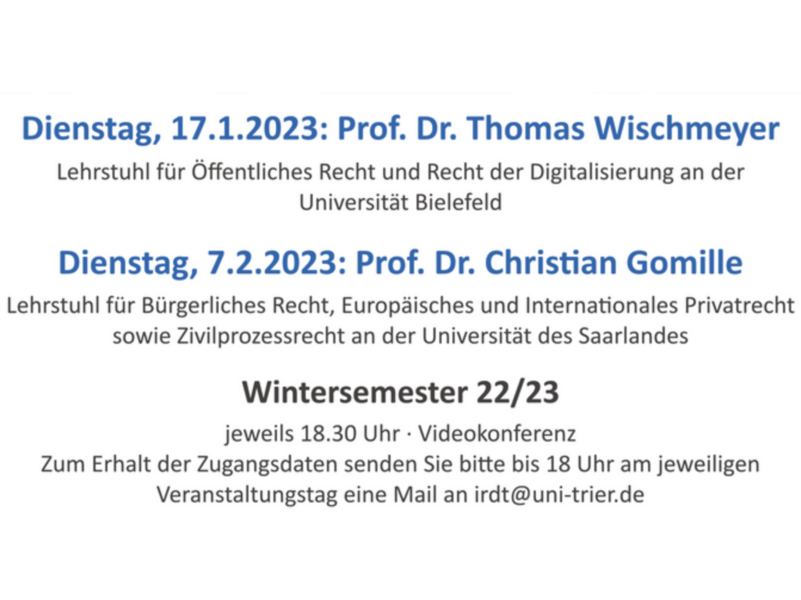
This winter semester 2022/23 the Institute for Digital Law Trier (IRDT) invites again for the Talks of Trier about Digital Law (Trierer Gespräche). Those are concerning the topic: “Sicherheitslücken“ (“security holes“)
On the 17th January 2023 Prof. Dr. Thomas Wischmeyer (Universität Bielefeld) will talk about security holes approved by the state. On the 7th January 2023 will follow a presentation by Prof. Dr. Christian Gomille (Universität des Saarlandes) with the title: „Der Feind im eigenen Haus? – (Vertragliche) Ansprüche auf Sicherheits-Updates“ (The enemy in your own house? – (Contractual) Claims for security updates“).
Just like last year, the IRDT will also hand out certificates for participations for those students who attended both events and participated actively in the discussion (at least one contribution per event).
For the meetings access data, please, send an e-mail to irdtuni-trierde (until 18 o’clock on the events day).
66. Talks of Bitburg: Strategic Litigation – the execution of collective interests at German courts
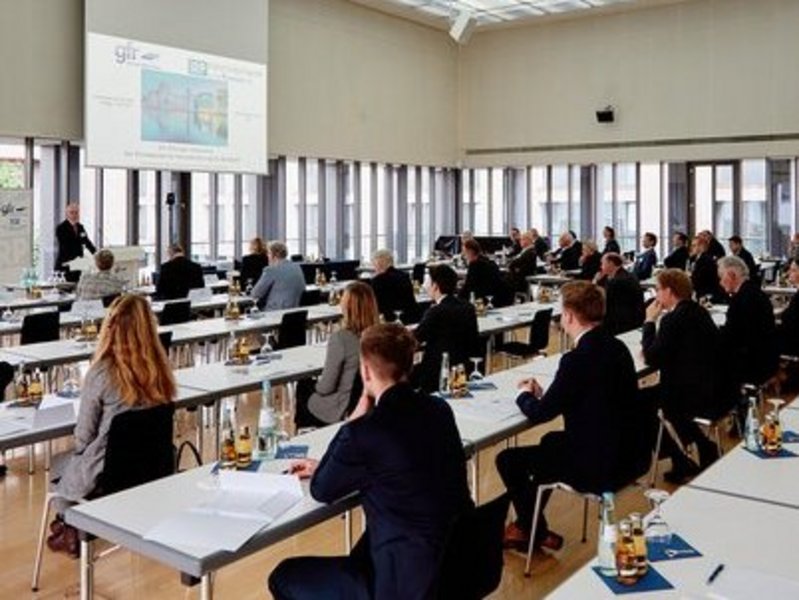
In 2023 the Gesellschaft für Rechtspolitik (company for Legal Policy) (gfr) and the Institut für Rechtspolitik an der Universität Trier (Insitute for Legal Policy Trier) (IRP) organize the Bitburger Gespräche (Talks of Bitburg). The topic of the 66. Talk on 12th and 13th January 2023 in Trier is: „Strategic Litigation – die Durchsetzung kollektiver Interessen vor deutschen Gerichten“ („Strategic Litigation – the execution of collective interests at German courts“.
The event is non-public and only for invited guest. The contributions will be published in due course.
Yearbooks of "Talks of Bitburg" available online for free

The publishers C.H. Beck and Mohr Siebeck allow the Institut für Rechtspolitik (Institute for Legal Policy) (IRP) to download all single contributions of the Bitburger Gespräche (Talks of Bitburg) and the „Bitburger Gespräche in München“ („Talks of Bitburg in Munich“) in pdf-format for free.
The contributions can be found here.
Further informations to former kinds of events and to the yearbook are available on the website of the IRP.
“The Cambridge Handbook of Responsible Artificial Intelligence” now available (E-Book-version open access!)
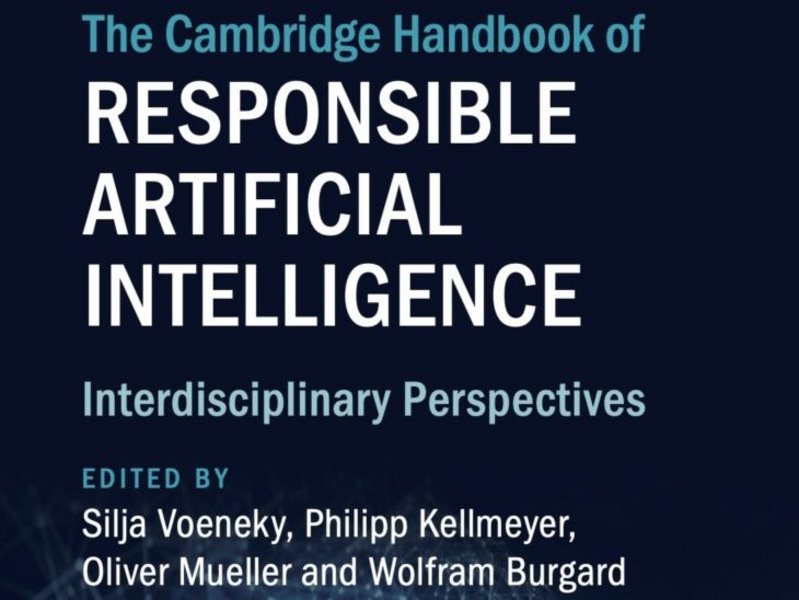
Now, the “Cambridge Handbook of Responsible Artificial Intelligence – Interdisciplinary Perspectives” (Vöneky/Kellmeyer/Mueller/Burgard (eds.)) were published as e-books and, further more, as printed versions. Antje von Ungern-Sternberg contributed with an article with the title “Discriminatory AI and the Law – Legal Standards for Algorithmic Profiling”.
The whole handbook is available open acces and can be found here. To the contribution by Prof. Dr. von Ungern-Sternberg follow here.
The printed version of the handbook is obtailnable with the ISBN 978-1-00-920786-7.


